Archive for the ‘Indigenous People and Communities’ Category
Ecuador is one of the biggest exporters of the Cocao bean to make Coco and Chocolate in the world. The plant which comes from South America was even used as a common currency throughout this region before the Spanish invasion.
What might surprise you when you get to Ecuador is why its so hard to find good chocolate in a country that produces 130,000 tonnes of Cocao a year. Its because all the Cocao is for export and monstrous corporations like Nestle control the local market.
But chocolate lovers dont despair just yet, there is an oasis in the desert.
Salinas de Guaranda
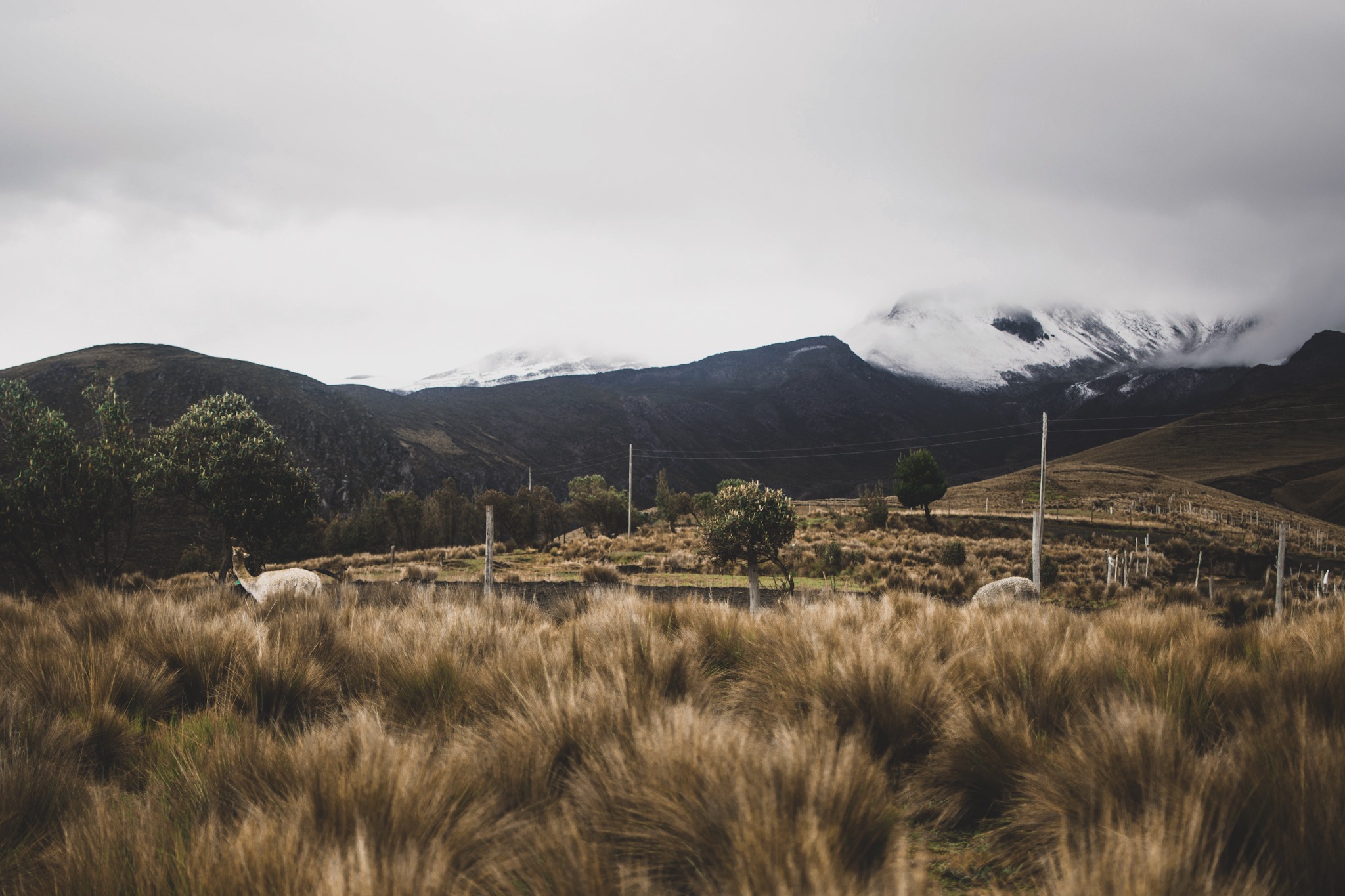
Salinas de Guaranda is a famous little town in the Ecuadorian Andes that is about two and an half hours by bus from Riobamba. What makes the town so popular amongst both Ecuadorian and foreign tourists alike is its cheese and chocolate factories as well as the great variety in hand-knitted llama and alapca wool clothing.
A Swiss man called Father Antonio Polo used his knowledge in how to produce Swiss Chocolate and Cheese to set up a cooperative run by the people of Salinas that has literary pulled the entire community out of poverty.
The delicious swiss Chocolate they make in Salinas melts in your mouth and include the famous Blue Bird “Pajaro Azul” Chocolate named after the local moonshine alcohol and my favorite hot chocolate laced with chile powder.
Now with regards to the Cheese if you have been in Ecuador and South America for a while you will know that the omnipresent fresh, white, and tasteless stuff they have over here leaves a lot to be desired compared to our aged cheeses back home.
But the cheese in Salinas de Guaranda is every bit as good as the chocolate – so good that they are both sold on the international market along with all of the handwoven alpaca wool clothing.
How To Get There
The Conventional Way:
From Riobamba take the “Arenal Guaranda” bus that leaves in the morning from the main bus terminal. (The G in Guaranda sounds more like a W) It will cost about $2.50
The Adventurous Way:
Check out the Horseback Riding Trips and Chimborazo Remote Communities Trek we run that let take you around the beautiful scenery between the Chimborazo Highlands and Salinas.


Few of these Amazonian tribes live as they did as little as 50 years ago and fewer still remain uncontacted by what we egotistically refer to as “civilization.”
The uncontacted tribes that remain in the Amazon are under threat as illegal loggers, poachers (and in Ecuadors case the Oil Companies) ruthlessly push further and further into the jungle. Another of the biggest dangers to these tribes is that their immune systems have been sheltered from the innumerous diseases and infections of modern civilization and something as small as the common cold can wipe them out like they did to the Australian Aboriginies and other indigenous groups in world history.
We need to do more to protect these peoples so that history does not repeat.
Uncontacted Tribes of the Ecuadorian Amazon
Because Ecuador has the fastest rate of deforestation in the entire Amazon basin and the largest oil reserves outside of Venezuela the rich and magical cultures of the Kichwa, Shuar, and Huaorani have had no choice but to change and adapt to an increasingly brutal and unjust world to survive.
The majority of these tribes have had to abandon the nomadic lifestyle and setup small villages to protect their territory from illegal land grabs and sadly in the worst effected areas some of these tribes have abandoned their native religion and language as well.
Ecuador does however have as many as five tribes living in voluntary isolation that have refused to be eaten up by the modern world. These tribes are of the Huaorani ethnicity and are called the Tagaeri, the Huiñatare, the Oñamenane, and two groups of the Taromenane that currently live the naked and nomadic life of their ancestors inside the Yasuni Biosphere and along the border of Peru.
The impending drilling of the giant oil fields inside Yasuni National Park will change all of that.
Today in Ecuador many people doubt these tribes still exist and the oil companies with vested interests in the Yasuni have rigorously tried to push this view. A friend who works in the Ministry of Environment in Coca has seen aerial photos taken by the Ecuadorian Military that prove their existence but the government will not release them – the optimist in me hopes this is to conceal their location instead of attempting to conform to the oil companies powerful point of view.
From time to time other evidence emerges that is too hard to refute about the existence of these tribes – like the body of a illegal rare wood logger found in Yasuni National Park with 7 spears in his stomach. Or reports that these illegal loggers murdered five uncontacted tribes people and cut off their heads to intimidate them.
Uncontacted Tribes of the Brazillian Amazon
We know very little about the language and cultures and even whereabouts of many of the Amazons uncontacted tribes. Sadly a few of South Americas governments like Peru have used this as an excuse to claim they do not even exist. To counter this stupidity a documentary with some fascinating footage of an uncontacted tribe in Brazil has been released to defend the rights of these people. You can see part of it here:
You can help by signing this petition addressed to President Humala of Peru to step up and protect the human rights of these people.
There are many ethnically distinct tribes in the Amazon Rainforest. Of these indigenous groups Ecuador has some of the most interesting that have fascinated anthropologists for decades for of their practice of Shamanism and Shrinking Heads. The three main tribes of the Ecuadorian Amazon are the Kichwa, the Shuar, and the Huarani
The Shuar Tribe of the Amazon
The Shuar are one of the largest tribes in the Amazon inhabitating much of the Ecuadorian Amazon and the north of Peru. They are also one of the most mystical of the Amazonian Tribes and their Shamans are the most feared.

In the past when fighting broke out with other tribes the Shuar would routinely hunt the heads of their enemies and shrink them. These shrunken heads became trophies where it was believed they could control the soul of their victim which gave them power over women.
Now its illegal to kill and shrink heads many Shuar have turned to using the heads of the poor old anthropomorphic Sloth for practice.
In the traditional Shuar tribe the men hunted and wove clothes while the women gardened and forriaged for fruit. The older women of the tribe also made an alcoholic drink called “Chica” made out of fermented maiz that the toothless women chewed, creating a catalyst with their saliver. Sounds delicious doesnt it? If you visited a tribe and refused to drink it that would be considered a great insult.
The Kichwa Tribe of the Amazon
The Kichwa Tribe of the Amazon are ethnically similar to the Quechua of the Andes mountains in Ecuador and Peru. They speak pretty much different dialects of the same language but their traditional dress varies vastly due to the difference in climate between the Andes and Amazon.
The Kichwa are considered the most powerful of the Amazons Shamans and traditionally the Shuar and the Kichwa have been bitter enemies and fought many battles. Times are changing however and Marco who help runs our volunteer program at the Paraiso Eco Lodge is a Kichwa Shaman and his wife is Shuar.
The Kichwa also have been one of the most successful tribes in defending their land from Petrol Companies. Their peaceful protests against the “Petroleros” are often supressed violently with the help of the Ecuadorian government. but that does not mean they were ineffective.
In 2003 the Sarayaku Kichwa community went to the Inter-American Commission on Human Rights about an human rights abuse when four community leaders were detained by the Ecuadorian Military and Police who tortured the Kichwa at an oil facility.
The Huaorani Tribe of the Amazon
The Huaorani are the warrior tribe of Ecuadors Amazon. Their territory is located in the Yasuni Biosphere but stretches into Peru. Traditionally they believed that the world consisted of a disc with snow capped mountains that smoked on one side with an impenatrable jungle in the middle and never ending rivers at the end.
They do not practice Shamanism in the same form as the other tribes by drinking hallucinogenic plants like Ayahuasca and Malicahua but they do possess what some anthropologists call “Universal Knowledge.”
That is to say a child born in the Huaorani tribe will automatically possess the knowledge of all other Huaorani – including the encyclopedic knowledge of the medicinal plants in the Amazon.
What makes the Huaorani fascinating is that their language is unlike any other language spoken in the entire Amazon basin. The language of the Kichwa, Shuar and the majority of all other languages spoken in the Amazon originate from an ancient root language that travelled up the Paraná and Amazon Rivers tens of thousands of years ago.
Anthropologists say the Huaorani are the exception as their language is completely and fundamentally different from anything else spoken in the world like the Basque language in Europe. Nobody knows where the Huaorani came from.
The Huaorani also have as many as five “uncontacted” groups living in Yasuni area of Ecuadors Amazon that are living in voluntary isolation from the “civilized world.” These people are the most vulnerable of all of the Amazons Tribes especially considering the giant oil deposits that have been discovered on their land.
In the next post I will delve into the plight of these tribes.