The Guardian in the UK recently ran an article called Could Ecuador be the most radical and exciting place on Earth? which talks about the enormous reforms the Correa government has undertaken since taking office in 2007.
Ive criticised Rafael Correa a little on here with regards to Freedom of Expression in Ecuador and the murky undercurrents of the Yasuni ITT deal. There is no doubt however that Rafael Correa is one of the best presidents Ecuador has ever had.
Not since Jaime Roldós (the Ecuadorian president who was allegedly assasinated in a plane crash near an American military base for taking on the foreign owned oil and gas industry) has Ecuador had a president that cared more about its people and not self-enrichment. Its the reason the government has lasted so long:
The government is now the most stable in recent times and will soon become the longest serving in Ecuador’s tumultuous history. The president’s approval ratings are well over 70%. All this is due to the reorientation of the government’s approach, made possible by a constitution remarkable for its recognition of human rights and the rights of nature, and its acceptance of plurality and cultural diversity.
The consequence of these economic reforms enacted by Correa to create a more just and equitable society is that they have made him some very powerful enemies in Ecuadors elite class. This resentment boiled over on the 31st of September last year when rogue police forces kidnapped the president in what the government believes was an attempted coup.
Fortunately it failed and Rafael Correa has continued to use his doctorate in Economics to turn this once Banana Republic into a strong and steady latin american economy that will benefit Ecuadorians for decades to come.
The world media are reporting that the government secured a $117 Million downpayment (well over the 100 million needed) before December 31st 2011 to protect Yasuni National Park from being drilled for oil.
Firstly this is fantastic news that this important issue is still in the international spotlight.
It means more scrutiny for reports on corrupt dealings like Chevron Texaco using “blood money” to bribe the Ecuadorian government with $500 Million for the Yasuni ITT protection in exchange for forgetting its $18 Billion in damages it needs to pay for creating a “Chenobyl in the Amazon” 30 years ago.
“Given Chevron’s toxic legacy and the debt it owes the people and rainforests of Ecuador, the fact that this ‘bribe’ is even on the table is an aberration of justice. “This is a multi-billion dollar bait and switch, it’s illegal, and can’t be allowed.” said the Ecuador program coordinator for Kevin Koenig for Amazon Watch.
Why then are my friends who work at the Ministry of Environment and the Provincial Council for Coca in Orellana Province which controls Yasuni National Park not convinced?
Reaching the 100 million dollars may have saved Yasuni National Park for another year but my friends say the prospecting continues as usual. Its encouraging however to see that Rafael Correa donated the proceeds of the $40million lawsuit against the newspaper El Universo even though it challenged Freedom of Expression in Ecuador.
Lets hope that what the ex-president of the Yasuni ITT initiative Roque Sevilla said about President Rafael Correa in his Yasuni interview is not true.
Today many websites including Firefox, Copyblogger, WordPress, Wikipedia and a tonne of others are completely blacked out to raise awareness of the two anti internet freedom bills SOPA and PIPA.
Ive talked about the downward slide of Freedom of Expression in Ecuador before but what makes any attack on the Internet dangerous is that it restricts the freedoms of EVERYONE.
These Bills claim that they are to stop Piracy and the theft of Intellectual Property. The problem is that like the Prohibition of Alcohol in America in the 1920s it will only push Piracy further underground while punishing normal users like us. Anyone with the smallest amount of tech knowledge can use a VPN (Virtual Private Network) and a number of other ways to get around SOPA and there will always be ways to ensure the existence of big torrent sites like the Pirate Bay.
The scariest thing about SOPA however is it can crush dissenting voices on the web
For Martin Luther King day last monday if someone were to post a copyrighted speech of the great man in the comments section of this website then the SOPA could technically block the DNS of this website and PayPal freeze our account.
While I doubt anyone would ever want to target a tiny site in Ecuador like this one the SOPA and PIPA bills are more sinister when you take into account what very powerful forces have already done to dissenting voices like Wikileaks.
Wikileaks was subjected to a Banking Blockade that dried up its funding for its release of thousands of leaked reports on war crimes and government and corporate corruption. You can still donate to the extreemist racist sites like Ku Klux Klan however – as long as they dont get on the bad side of the powers that be.
With SOPA if one of twitters 100 million users posted a link to anything under copyright it gives the government hte right to shut it down. Same goes for Facebook, Google plus, and any other social network or community website.
This bill is dangerous and needs to be stopped.

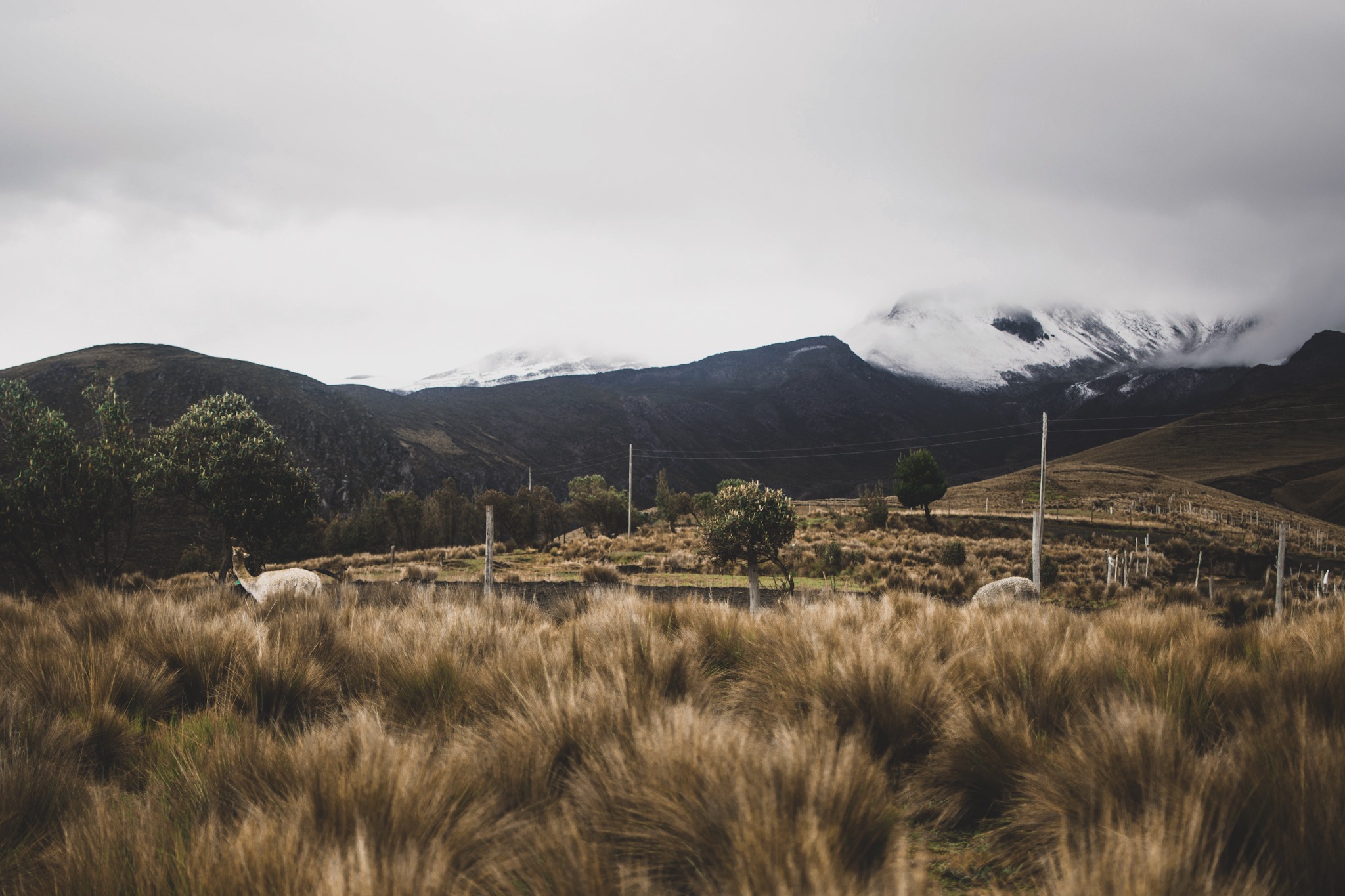
This testimony from Sarah from California is about her time in the Andes Alpaca Ranch at the base of Ecuadors highest mountain the extinct volcano Chimborazo
I enjoy traveling best when I am most involved with the communities that I am visiting. Ecuador Eco Volunteer provided a great opportunity for this and I felt very fortunate to have met him and his family and friends.
Really they went above and beyond for me in terms of hospitality. It was such a welcoming experience, especially traveling on my own, I felt as if I had a family there.
I have vounteered in the past, where I wasn’t sure what I was doing was really helping out the community but I really felt I got to see, first hand how the community was benefitting. I volunteered at the Andes Alpaca Ranch near Chimborazo, teaching English to a wonderful group of children and I will always cherish the memories I had there among many other things.
If you have any questions for me feel free to get my email through Wlady and I would be more than happy to go into further detail about this awesome experience. Thanks Wlady and to your family as well…por favor mande saludas para mi.
Frogs are like Canaries in a Coal Mine. Their extremely sensitive skin which they use to breath and absorb moisture means they are the first creatures to start croaking (ie. asphyxiating to death) due to pollutants in their habitat.
So if frogs are one of the best indicators of the overall health of an ecosystem what does it mean when mass extinctions of frogs around the planet are occurring at a rate unseen in human history?
It means the world is dying.
That is not alarmist or bleeding heart tree hugging extremist thinking – its a fact. Every eco-system on earth is in a state of decline.
Frogs in Ecuadorian Amazon and Coastal Forests
Ecuador is home to over 480 species of frogs and other amphibians with hundreds more yet to be described and discovered.
About 70% of these species are endemic to Ecuador which means you will not find them anywhere else on Earth. They live in vastly different climates and landscapes from the Coastal Forests and Galapagos Islands to the Andean Paramo and Ecuadorian Amazon Rainforest and vary greatly in appearance.
The two biodiversity hotspots in Ecuador are its coastal dry forest and amazon rainforest in particular the Yasuni Biosphere. Sadly 95% of Ecuadors Coastal Dry Forest has already been deforested to make way for farmland. Considering scientists recently discovered 30 new species of frogs in whats left of this extremely special and endangered ecosystem makes you wonder how many amazing creatures in the area have already been extinguished from the planet.
Now that the Ecuadorian Government failed to raise $100million before January 1st in its Yasuni ITT Initiative we will soon find out the fate of the frog and amphibian life in Ecuadors other biodiversity hotspot – one of the last pristine regions left on the planet – Yasuni National Park.